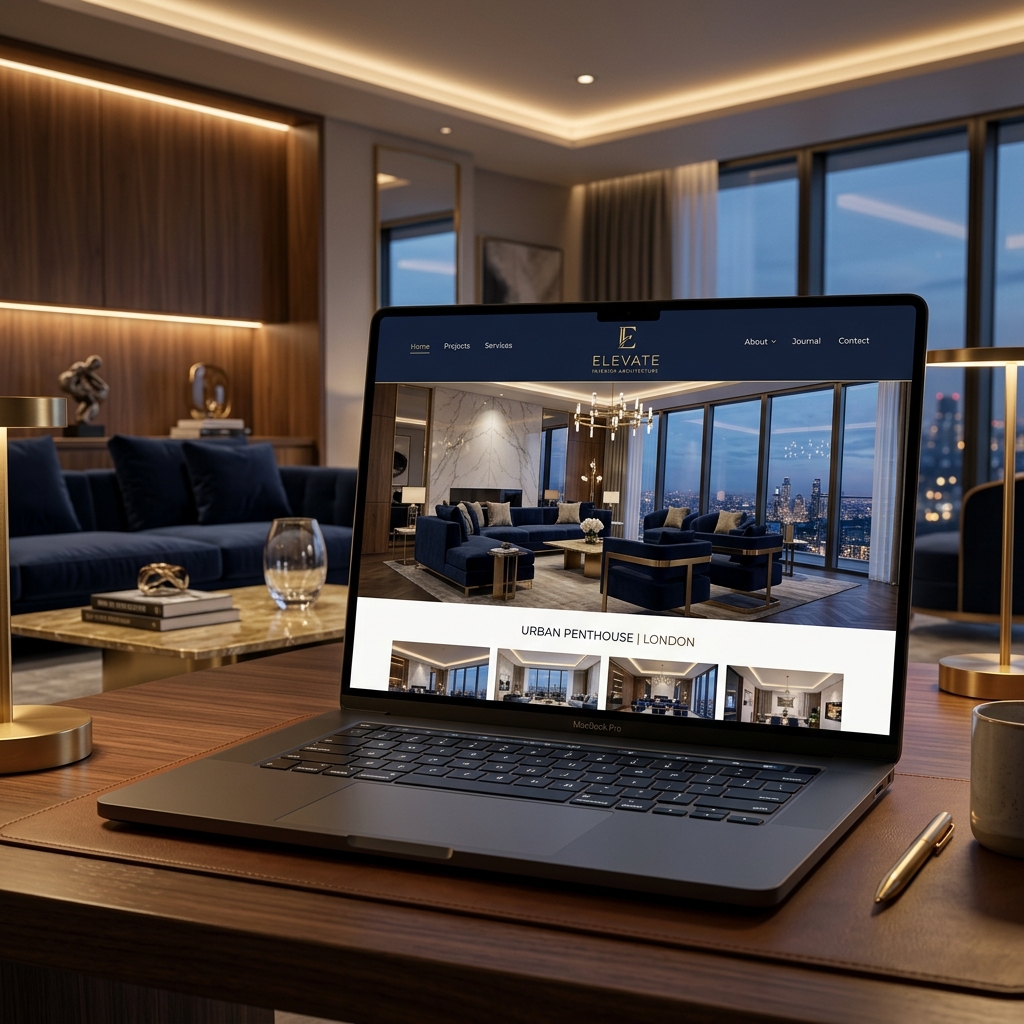
Picture this: A high-net-worth homeowner in Mumbai is about to spend ₹40 Lakhs on a full-home interior renovation. They open Google, type "best luxury interior designer Mumbai", and start evaluating studios. Within 8 seconds they have made a shortlist. Is your studio on it — or is it your competitor?
The painful truth is that most interior designers pour everything into Instagram reels and stunning mood boards — while their actual website looks like it was built in 2017 on a free template. In a market where your first impression is everything, a poor website isn't just embarrassing — it is costing you crores in potential projects every single year.
This guide reveals the exact website design strategy for interior designers that Pixel Precision Web uses to help studios go from "another Instagram account" to the top-of-mind choice for high-ticket residential and commercial clients.
Why Your Instagram Portfolio Is Silently Killing Your Revenue
Instagram is a discovery platform. It gets you noticed. But it cannot close deals — and here is why premium clients do not convert from social media alone:
- Zero credibility signals: Instagram has no "awards", "certifications", or press mentions — your website does.
- Algorithm dependence: One algorithm change can erase years of reach overnight. Your website is real estate you own.
- Price shoppers, not dream clients: "DM me for pricing" attracts bargain hunters. A polished inquiry form with project scope fields pre-qualifies luxury prospects automatically.
- No SEO ranking: Instagram posts don't appear when clients search "luxury interior architect Pune" on Google. Your website does.
1. The First 5 Seconds Are Everything — Your Hero Section Must Stop the Scroll
When a potential client lands on your interior designer portfolio website, you have exactly 5 seconds to stop them from bouncing to the next studio in their browser tab. The homepage hero section must immediately communicate:
- What you do — not "We are a design firm." But: "We design bespoke luxury homes for discerning Mumbai families."
- Who you serve — residential, commercial, hospitality, villas?
- Your signature aesthetic — a stunning full-bleed project photograph, not a stock image.
- The single most important action — a bold "Book a Design Consultation" button, above the fold, always visible.
Studios that nail this hero section see 3–5× more consultation requests than those with generic sliders and vague taglines.
2. Project Case Studies: Stop Showing Photos — Start Telling Stories
Any interior design website can show beautiful photos. The websites that win high-ticket projects go deeper. They turn each completed project into a story that makes the client see themselves in the outcome.
A powerful interior design case study page includes:
- The Client's Challenge: "A 2,800 sq. ft. Ahmedabad penthouse with terrible natural light, disconnected living zones, and the owner's dream of a New York loft feel."
- The Design Vision & Material Palette: Mood board, marble selection, lighting plan, bespoke furniture references.
- The Transformation: A before/after interactive image slider showing the dramatic spatial change.
- The Result in Numbers: "Project completed 12 days ahead of schedule, within budget, with a 5-star client review."
- A Real Client Testimonial with the client's first name, city, and property type.
This level of storytelling does two things: it builds complete trust, and it attracts clients with similar project briefs — your ideal customer.
Ready to upgrade your studio's digital presence?
Stop losing ₹50L+ projects because your website looks like it was built in 2015. Let Pixel Precision Web build a high-converting luxury portfolio that works as hard as you do.
Book a Free Strategy Call3. Mobile-First Design: Your Clients Are Judging You From Their iPhone
Over 74% of high-net-worth individuals in India browse on mobile during evening hours — precisely when they are relaxing and dreaming about their renovation. If your interior design website is not flawlessly optimised for mobile, you are losing the majority of your highest-value leads.
Critical mobile requirements for interior design websites:
- Touch-optimised gallery carousels — smooth horizontal swipe through full-screen project photos.
- Tap-to-call and tap-to-WhatsApp buttons — always visible in the mobile sticky header.
- WebP image compression — so 4K project photography loads in under 1.5 seconds on a 4G connection.
- Legible typography at 16px+ — no pinching, no zooming, no frustration.
4. SEO for Interior Designers: Rank When Clients Search
When a property developer in Bangalore searches "commercial office interior designer Bangalore" or a homeowner in Rajkot types "luxury home interior architect Rajkot" — they are ready to hire. They just need to find you first. That is exactly what interior design website SEO delivers.
The SEO pillars every interior designer website needs in 2026:
- City-specific landing pages: Dedicated pages for each city you serve — "Interior Design Services in Surat", "Interior Designer in Rajkot" — targeting high-intent local searches.
- Schema markup: Structured data that lets Google show your review stars, project types, and service areas directly in search results — dramatically increasing click-through rates.
- Optimised project image ALT tags: Every photo should be described for Google — "Italian marble kitchen interior design luxury villa Ahmedabad" — not just "IMG_4821.jpg".
- Blog content strategy: Monthly articles on topics like "10 Interior Design Trends for Indian Homes in 2026" drive consistent organic traffic and position you as an industry authority.
"Interior designers who invest in SEO stop competing on price — because clients find them on Google already convinced of their expertise. The website does the selling before the first call."
5. Lead Capture Features That Pre-Qualify High-Ticket Prospects
A luxury interior design website should never show just a "Name, Email, Message" contact form. That is a missed filtering opportunity. Instead, a strategic Project Inquiry Form qualifies leads automatically:
- Project Type: Residential / Commercial / Hospitality / Villa
- Property Size: Under 1,000 sq.ft. / 1,000–2,500 sq.ft. / 2,500 sq.ft.+
- Estimated Budget Range: ₹5L–₹15L / ₹15L–₹50L / ₹50L+
- Expected Start Timeline: Within 1 month / 1–3 months / Planning stage
- City & Location: Text field
This form does three things simultaneously: it signals to the client that you are a serious professional with a defined process, it filters out low-budget inquiries automatically, and it gives your studio the information needed to prepare a tailored first response.
6. Trust Signals That Close the Deal Before You Pick Up the Phone
In the luxury interior design market, trust is everything. Your website must display social proof and authority signals that make the decision to contact you feel obvious and safe:
- Press & Media Mentions: "As featured in Architectural Digest India, Better Homes & Gardens"
- Awards & Recognition: Any design awards, industry association memberships, or certifications.
- Client Count & Project Metrics: "200+ projects delivered | 15 cities | 98% client retention"
- Video Testimonials: A 60-second video of a satisfied client walking through their completed home is worth a thousand written reviews.
- Verified Google Reviews Badge: Embed your live Google Business rating prominently on the homepage.
What Does a Premium Interior Design Website Cost in India?
Here is an honest benchmark for professional interior design website development in India in 2026:
- Basic portfolio (5 pages, no case studies) — ₹15,000 to ₹25,000
- Professional studio website (8–12 pages, project pages, SEO setup) — ₹30,000 to ₹60,000
- Premium portfolio with case studies, booking system, blog, local SEO — ₹60,000 to ₹1,20,000
- Enterprise / multi-city firm with 3D walk-throughs and CRM integration — ₹1,50,000+
Consider this: a single additional ₹20L project booked through your optimised website pays for the entire website investment 100 times over. For premium interior studios, website design is not an expense — it is your highest-return marketing investment.
Ready to Build the Website Your Studio Deserves?
At Pixel Precision Web, we specialise in building high-converting, visually stunning websites for interior designers, architects, and design studios across India. Every project includes custom UI/UX design, full mobile responsiveness, on-page SEO, client-owned domain and hosting, and 1 full year of dedicated post-launch support.
We have built revenue-generating digital platforms for service businesses across Gujarat and beyond — and we bring that same conversion-focused approach to every interior design website we craft.
Stop losing high-ticket clients to competitors with a better website. Book your free consultation with Pixel Precision Web today — no obligation, just clarity on what your studio's website could be doing for you.
Frequently Asked Questions
How much does website design cost in India?
Website design in India costs between ₹6,999 for a basic business website and ₹50,000+ for a fully custom design with animations and advanced functionality. Pixel Precision Web offers affordable packages starting from ₹6,999.
What makes a good website design in 2026?
A good website design in 2026 is mobile-first, loads in under 3 seconds, has clear calls-to-action, uses modern typography and a clean color palette, and is optimized for both users and search engines.
Who is Janvi Patel?
Janvi Patel is a Web Designer & Developer and the founder of Pixel Precision Web, a web agency based in Rajkot, India. He specializes in website design, web development, and digital marketing for Indian businesses.
What services does Pixel Precision Web offer?
Pixel Precision Web offers website design, web development, logo design, e-commerce development, CRM development, and digital marketing services for businesses across India and globally.