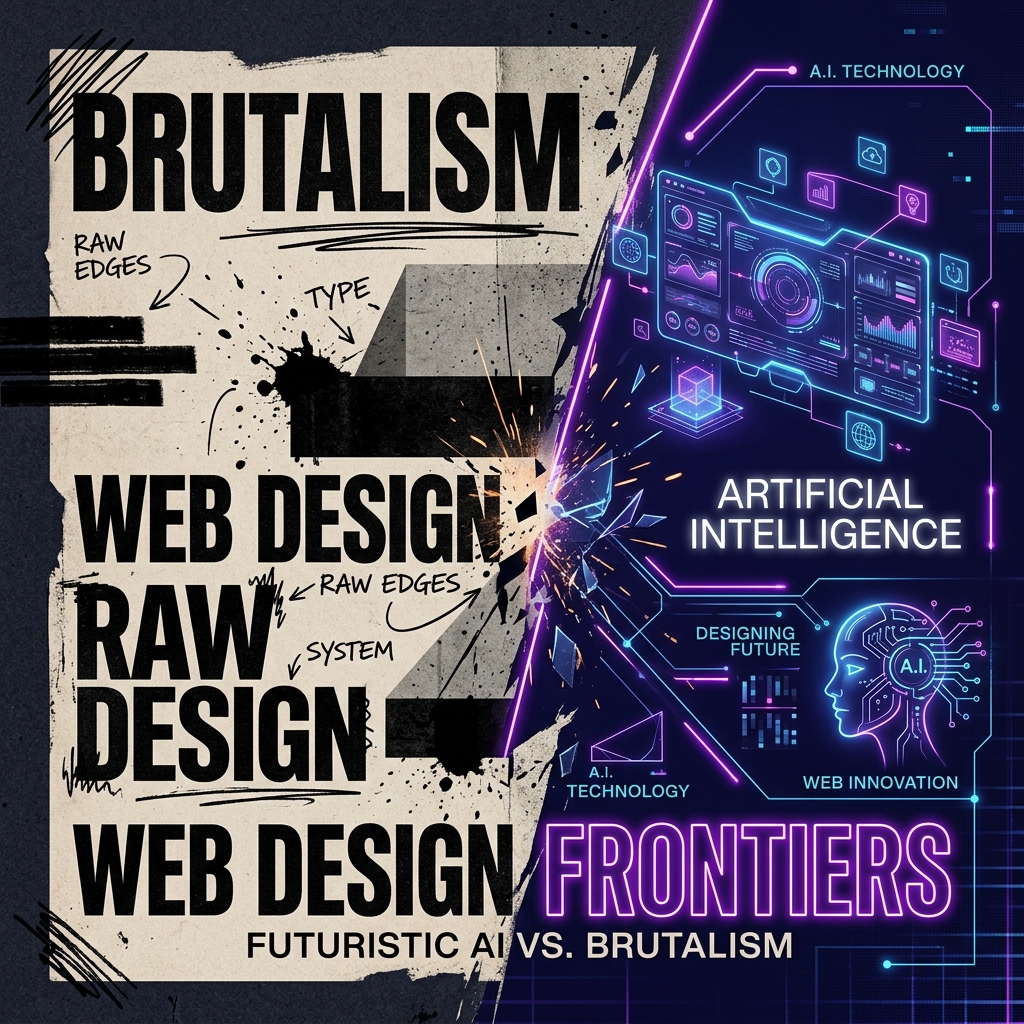
If you look closely at the websites winning awards in 2026, you will notice a fascinating paradox. On the backend, sites are becoming infinitely more complex, leveraging Artificial Intelligence to create highly personalized, predictive user journeys. On the frontend, however, there is a massive pushback against the "perfect, smooth, AI-generated" look.
We are witnessing the clash—and beautiful combination—of the Machine Experience (MX) and the Human Touch. The future of the web isn't just about what looks good; it's about what feels authentic while functioning at the speed of thought.
Let's break down the two most defining web design trends of 2026: AI-Driven Personalization and Tactile Brutalism.
Trend 1: AI-Driven Personalization (The Invisible Hand)
For decades, web design was largely a "one size fits all" endeavor. You built a static layout, and every single user who visited the page saw the exact same hero image, the exact same copy, and the exact same call-to-action.
In 2026, that approach is dead. The new standard is AI-Driven Personalization.
Artificial Intelligence is no longer just a chatbot widget you stick in the corner of your screen. It is now woven into the very fabric of the CMS and the frontend framework, allowing the website to act as a 24/7 digital concierge.
From Static Pages to Dynamic UI
How does AI personalization actually look in practice?
- Predictive Navigation: The menu items shift based on what the user has previously browsed. If a user frequently looks at SEO services, the "SEO Packages" link moves to the primary position.
- Contextual Hero Sections: A first-time visitor sees a broad introductory hero section explaining your agency. A returning visitor sees a targeted case study related to the specific industry they work in.
- Role-Based Journeys: Machine learning algorithms quickly classify a user (e.g., "Bargain Hunter", "Enterprise Decision Maker") based on their scroll speed, click patterns, and referral source, adjusting the tone of the copy accordingly.
Trend 2: Tactile Brutalism (The Human Pushback)
Here is where the paradox comes in. Because AI can now generate flawless, hyper-realistic images and smooth, generic corporate layouts in seconds, internet users are experiencing "AI Fatigue."
When everything looks perfect, perfection loses its value. People crave authenticity. This has given rise to the massive trend of Tactile Brutalism (sometimes called "Human-Centric Design").
Tactile Brutalism is a deliberate rejection of the glossy, rounded-corner, generic "SaaS aesthetic" that dominated the early 2020s. It wants to remind the user that a human being designed this interface, not an algorithm.
Key Elements of Modern Brutalism
- Visible Architecture: Using bold 1px borders to clearly define grids, sections, and divs. It exposes the "bones" of the website.
- Simulated Physical Textures: Incorporating subtle film grain, paper textures, or halftone dot patterns over digital assets to make the screen feel like a physical object.
- "Human Scribbles": Adding hand-drawn arrows, messy highlighter marks, or imperfect doodles on top of clean photography. This signals immediate human intent.
- Stark Typography: Utilizing massive, high-contrast, un-apologetic fonts that dominate the viewport and act as the primary visual element rather than relying on stock photos.
Want a Website That Stands Out in 2026?
Don't settle for a generic template that looks like everyone else. Let Pixel Precision Web build a high-performance, uniquely branded experience for your business.
Let's Discuss Your ProjectThe Sweet Spot: Merging AI Logic with Human Aesthetics
"The future of web design isn't about AI replacing human creativity. It's about AI automating the logic so humans can focus on the art."
So, do you have to choose between being a hyper-optimized AI machine or a raw, artistic human?
Absolutely not. The most successful websites of 2026 are marrying these two concepts perfectly. They use the AI-Driven Personalization on the backend to ensure the right content gets to the right user instantly, while wrapping that content in the bold, authentic visual language of Tactile Brutalism.
This creates a digital experience that is highly efficient, yet emotionally resonant. In a world increasingly dominated by artificial intelligence, your business's humanity is your greatest unique selling proposition. Show it off in your design, but let the AI handle the heavy lifting of the user journey.
Frequently Asked Questions
What is AI-Driven Personalization in Web Design?
AI-driven personalization is the use of artificial intelligence and machine learning to dynamically alter website content, layouts, and recommendations in real-time based on the individual user's behavior, location, and preferences.
What is Tactile Brutalism?
Tactile Brutalism is a design trend characterized by raw, structural elements like 1px borders, high-contrast typography, and simulated physical textures (like grain or paper) designed to feel distinctly human, opposing the overly smooth 'AI-generated' aesthetic.